Stainless Steel’s Corrosion Resistance Driving Indian Railway’s Modernisation
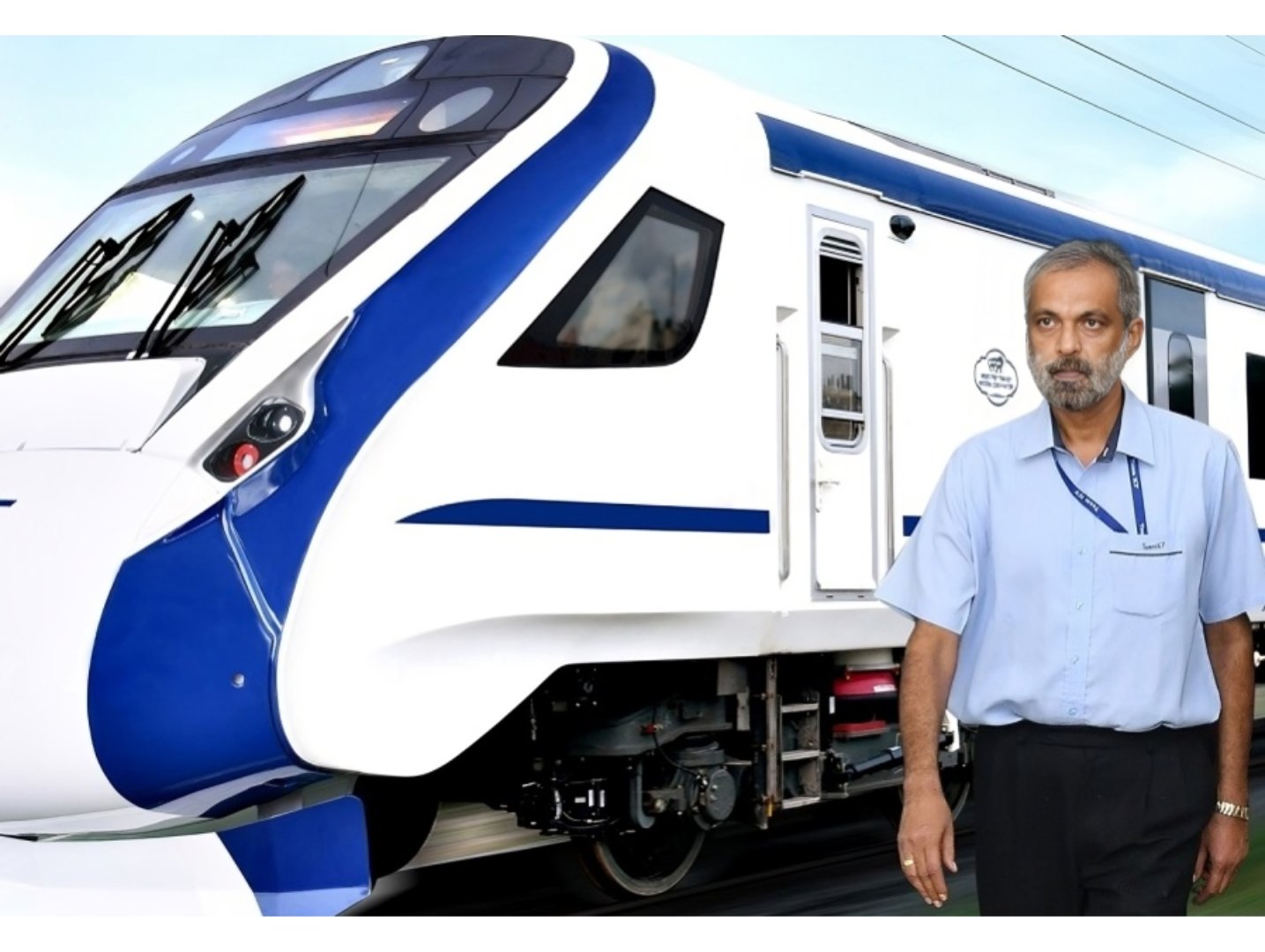
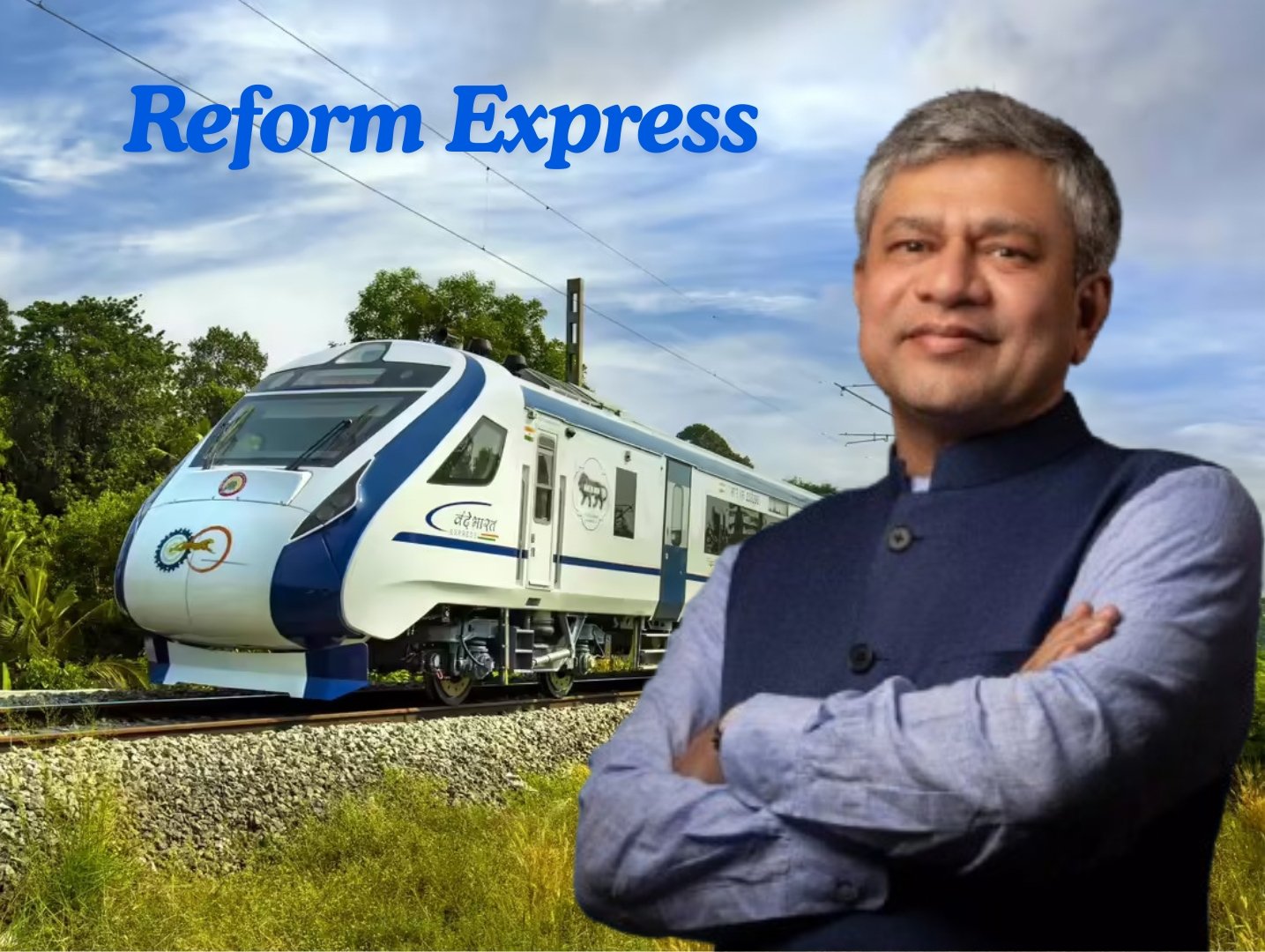
Vande Bharat’s creator, Dr Sudhanshu Mani, shares how stainless steel is shaping the future of Indian Railways with durability and design, in an exclusive interview with Shriyal Sethumadhavan.
Stainless steel has become a cornerstone material in Indian Railways’ modernisation drive. Widely used in passenger coaches and freight waggons, it ensures longer service life, reduced maintenance costs, and enhanced aesthetics. Dr Sudhanshu Mani, the creator of the Vande Bharat train, spoke with Team Stainless today to share his insights on the use of stainless steel in Indian Railways.
Dr Mani led the Train 18/Vande Bharat project, India’s first-ever indigenous semi-high-speed train, from concept to delivery. After serving Indian Railways for 38 years, he served as Railway Advisor in the Embassy of India, Berlin, for three years, interacting with railway systems of advanced countries worldwide on behalf of Indian Railways.
In this conversation, he dwells on stainless steel’s superior corrosion resistance and aesthetic appeal as its most practical advantages in railway applications and its established role in modern coach manufacturing.
What are the most significant benefits that you have observed in adopting stainless steel for railway applications, particularly in projects like Vande Bharat?
The main driver has been corrosion resistance for coaches. Durability is debatable, but aesthetic appeal is better than mild steel.
As for locomotives, stainless steel has not found much application as corrosion is not such an issue in locomotives. To clarify, locomotives are what pull trains, coaches are for passengers, and wagons carry goods. In locomotives, one component that comes to mind is the transformer tank, which is currently made of aluminium, mainly for weight considerations. But weight isn’t necessarily a problem for locomotives; in fact, the heavier they are, the greater the tractive effort they can generate, as long as it is within the allowable axle load. Basically, the main advantages of stainless steel remain its corrosion resistance and aesthetic appeal.
How has the demand for locally manufactured stainless steel evolved under the Make in India initiative? And in the case of Vande Bharat, where has stainless steel been sourced from?
The demand for stainless steel in coach manufacturing really took off with the introduction of the Linke-Hofmann-Busch (LHB) technology in the early 2000s. That technology already used stainless steel instead of carbon steel, and India successfully adapted and scaled it. So, all the coaches manufactured were gradually shifted to stainless steel, and Vande Bharat was just an extension of this. Vande Bharat simply continues that transition. Today, the number of coaches manufactured annually is around 9,000 to 10,000, compared to fewer than 5,000 say 10 years back. It is growing steadily as investments in the railways increase.
As for sourcing, the designs are made according to the sheet sizes and rolls available in India. For example, width. You will find SAIL and Jindal make it in widths of 1.25 metres. Jindal also makes 1.5 metres. But nobody makes 2 metres (2,000 mm) in width. The use of such large sheets reduces welding requirements, as they don’t have as many welding joints.
In some paintless coaches, we did use 2-metre-wide sheets sourced from Korea. But overall, stainless steel for rolling stock isn’t something India imports unless absolutely necessary. The designs have been tailored to the materials available from Jindal and SAIL, and that continues. So, it’s fully indigenous sourcing, with only a negligible amount of special material being imported.
What innovations or developments do you think are most critical to expanding stainless steel’s role in future railway projects?
Stainless steel manufacturers may push for the use of stainless steel underframes. No one is talking about stainless steel bogies, but underframes, the chassis on which the coach body sits, could be a target.
However, the current requirement neither aligns with global standards nor presents a real necessity for this shift. Stainless steel is rarely used for underframes worldwide, and I don’t see a major reason to change that. Today, coach bodies are entirely made of stainless steel. Some waggons are still not, but that’s a small number. Practically everything else, tanks, battery boxes, and similar components, is already stainless steel.
Since stainless steel use in railways is already at an optimum level, I don’t see a huge new demand in terms of innovation, except perhaps for certain components or sub-assemblies.
How does stainless steel align with the railways’ green goals?
If we compare mild steel and stainless steel, both are metals, and when they reach end-of-life, they’re scrapped and melted. Recyclability is common to both.
I don’t see any significant difference between metals in this regard. Aluminium might fetch a better scrap value, but since aluminium isn’t widely used in Indian railways, the comparison mainly remains between mild steel and stainless steel, and both are equally sustainable. I don’t think sustainability itself is a strong differentiating factor here.
Stainless steel is often considered expensive. How do you view its long-term value in railway infrastructure?
It is pricier, but the advantage of corrosion resistance outweighs that price. That’s the main reason the railways chose it; they assessed the cost-benefit balance carefully.
Corrosion is the biggest enemy of both coaches and waggons. For instance, waggons carry materials like coal and iron ore, which absorb moisture and cause corrosion. Coaches face corrosion from rain and also from waste discharge around toilets. So, you could argue stainless steel is more durable because it doesn’t corrode.
Is India’s stainless steel manufacturing ecosystem equipped to meet growing railway demand?
Both SAIL and Jindal are fully equipped to meet demand. There may be some smaller players, too, but these two take care of the majority of requirements. You won’t hear of production suffering due to a shortage of stainless steel inputs. They’re scaling up production and are well-prepared for current and future needs.
With India’s focus on high-speed and modern trains, do you see potential for exporting stainless steel-based rail solutions globally?
Exporting large fabricated components carries a big transportation penalty, though it’s not impossible. Some multinationals already manufacture coaches in India and ship them to places like Australia and Canada.
However, this usually depends on the multinational’s global operations and cost strategies. It’s not about exporting stainless steel itself; it’s about exporting coaches or rolling stock.
If India becomes a global player in train exports, like China but on a smaller scale, stainless steel will naturally get exported along with it. The focus should be on exporting trains to mid-level countries such as Argentina, Turkey, Malaysia, and Indonesia, nations that are developed enough to buy but not yet manufacturing their own.
What role do you think stainless steel will play in shaping next-generation railway design and infrastructure in India?
The current generation of Indian trains is already stainless steel, and except for high-speed rail, that’s likely to continue. Aluminium is too expensive, not only in terms of material but also because manufacturing aluminium profiles requires huge facilities and specialised welding setups. For regular trains, that’s not practical.
Globally, around 90 per cent of high-speed trains are made of aluminium and about 10 per cent of stainless steel. India’s indigenous high-speed project at BEML is in stainless steel, because we don’t have the facilities for aluminium. It would have to be imported and would become very expensive. If this indigenous high-speed train in stainless steel becomes successful, it will open a path for high-speed trains to be built in stainless steel in India.
Is there anything else you would like to add?
The trains are designed to last about 36 years, which gives ample scope for analysis. India is a highly corrosion-prone country, so stainless steel naturally makes sense. The life cycle cost is lower due to stainless steel’s corrosion resistance. There’s nothing more specific to add because stainless steel has already become the standard for rolling stock manufacturing in India.