India Turns Global for Stainless Steel Raw Material Supply
India is stepping up efforts to secure key raw materials for steel production, especially for stainless steel, by opening talks with Argentina, Indonesia, and Oman. As demand rises sharply, the country is looking abroad for reliable supplies of coking coal, iron ore, and nickel, raising a key question: Can India keep up with its growing steel ambitions?
India looks abroad for steel inputs
India, the world’s second-largest producer of crude steel after China, is preparing to hold discussions with Argentina, Indonesia, and Oman next month. These talks are expected to take place during a major global steel summit hosted by the Indian government, described as its biggest international event for the sector.
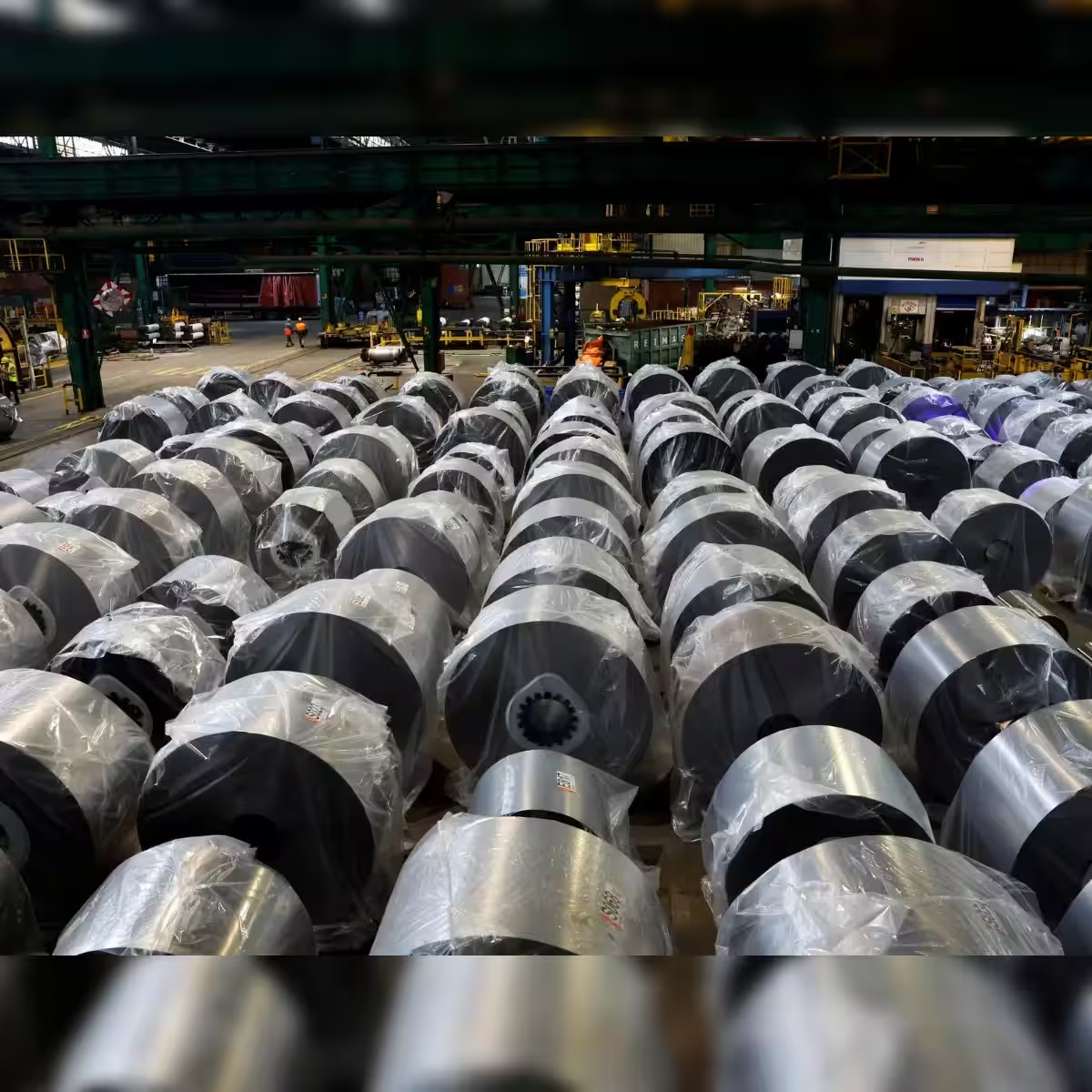
The aim is clear. India wants to boost access to essential raw materials used in steelmaking, particularly for stainless steel production. Stainless steel depends heavily on ferronickel, and Indonesia plays a crucial role here, as it holds the world’s largest reserves of nickel ore. Securing a steady flow of such materials is vital for maintaining production levels.
At present, India already depends on imports for many of these resources. It sources large quantities of iron ore from countries like Oman and Brazil. Recently, India also signed an agreement with Brazil to expand cooperation in mining and minerals, showing its intent to build stronger international partnerships in this area.
Focus on stainless steel and critical minerals
The push for raw materials is closely tied to the growth of stainless steel, which is widely used in construction, transport, kitchenware, and industrial applications. To keep up with demand, India needs consistent access to inputs like coking coal, iron ore, and nickel.
Alongside this, India is also looking at Argentina for supplies of lithium and other critical minerals. Lithium is essential not just for batteries used in electric vehicles, but also for renewable energy storage systems. Argentina is currently the fourth-largest producer of lithium globally, making it an attractive partner.
Officials have indicated that securing stable supplies of these materials, along with cobalt and rare earth elements, is a top priority. This is part of a broader strategy to expand steel production while moving towards cleaner, more sustainable energy systems.
Rising demand and growing challenges
India’s steel demand is increasing rapidly, driven by strong economic growth and higher spending on infrastructure projects. At the same time, the country is trying to expand its steel exports beyond Europe into Asia and the Middle East. This shift is partly due to the European Union’s carbon tax, which has made exports to Europe more challenging.
However, the sector is also facing serious hurdles. There are growing concerns about the reliability of overseas raw material supplies. In addition, a gas shortage linked to the ongoing conflict in the Middle East has created difficulties for smaller steel producers in India. Some units are struggling to maintain operations, and at least one company has warned of a possible shutdown.
Overall, India’s strategy shows a clear effort to secure its stainless steel future by strengthening global ties. Yet balancing rising demand with supply risks remains a key challenge for the industry.