Surge in Chinese Steel Imports Raises Concerns for Indian Manufacturers and Stainless Steel Sector
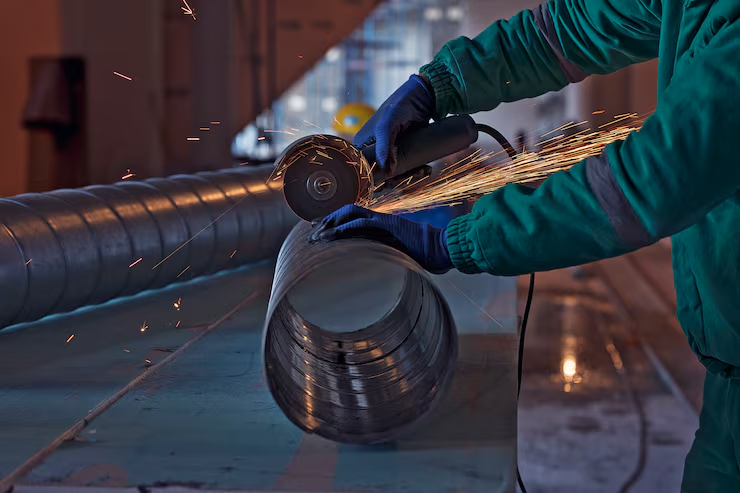
India’s steel industry is witnessing growing concerns over a sharp rise in steel imports from China, as low-cost shipments continue to enter the domestic market despite safeguard measures aimed at protecting local manufacturers.
Recent trade data indicates that imports of finished steel from China more than doubled in April 2026 compared to the same period last year, reaching their highest monthly level in at least two years. The surge has intensified pressure on Indian steelmakers, who are already navigating volatile raw material costs and increasing global competition.
Industry stakeholders have highlighted that a significant portion of these imports consists of rolled steel products, including hot-rolled coils and certain stainless steel grades. The availability of cheaper imported material is affecting pricing dynamics within the domestic market and raising concerns about the long-term competitiveness of Indian producers.
The situation has become particularly significant as India, traditionally a major steel-producing nation, recently witnessed a rise in finished steel imports that has altered market dynamics. While domestic demand continues to remain strong, driven by infrastructure projects, manufacturing expansion, automotive production, and construction activities, local producers fear that excessive imports could undermine investments and capacity utilization.
Impact on India’s Stainless Steel Industry
The stainless steel sector is closely monitoring the developments. Imported stainless steel products often arrive at prices lower than those offered by domestic manufacturers, creating intense competition across the supply chain.
For stainless steel mills, processors, and downstream manufacturers, the influx of low-cost imports can lead to margin pressures and reduced market share. Small and medium-sized enterprises, which form a vital part of India’s stainless steel ecosystem, may be particularly vulnerable if import volumes continue to rise.
Industry experts believe that sustained import pressure could discourage future investments in stainless steel production, processing facilities, and value-added manufacturing. This comes at a time when India is actively promoting domestic manufacturing and expanding its role as a global industrial hub.
However, the growing demand for stainless steel across sectors such as railways, food processing, architecture, infrastructure, automotive, healthcare, and consumer products continues to provide strong long-term growth opportunities for the industry.
Trade Policy Under Spotlight
The increase in imports has also renewed discussions around trade policy and market protection measures. Industry bodies are expected to seek closer monitoring of import trends and stronger safeguards to ensure fair competition for domestic producers.
At the same time, policymakers face the challenge of balancing the interests of steel consumers, who benefit from competitive pricing, with the need to protect domestic manufacturing capacity and employment.
Looking Ahead
India’s steel and stainless steel sectors remain well-positioned for growth, supported by strong domestic demand and ongoing industrial development. However, the recent surge in Chinese imports serves as a reminder of the challenges posed by global trade dynamics.
As the industry continues to expand, stakeholders will be closely watching future policy decisions and market developments to ensure that domestic manufacturers can compete effectively while supporting India’s broader manufacturing ambitions.