Why Union Budget 2026 is a turning point for stainless steel
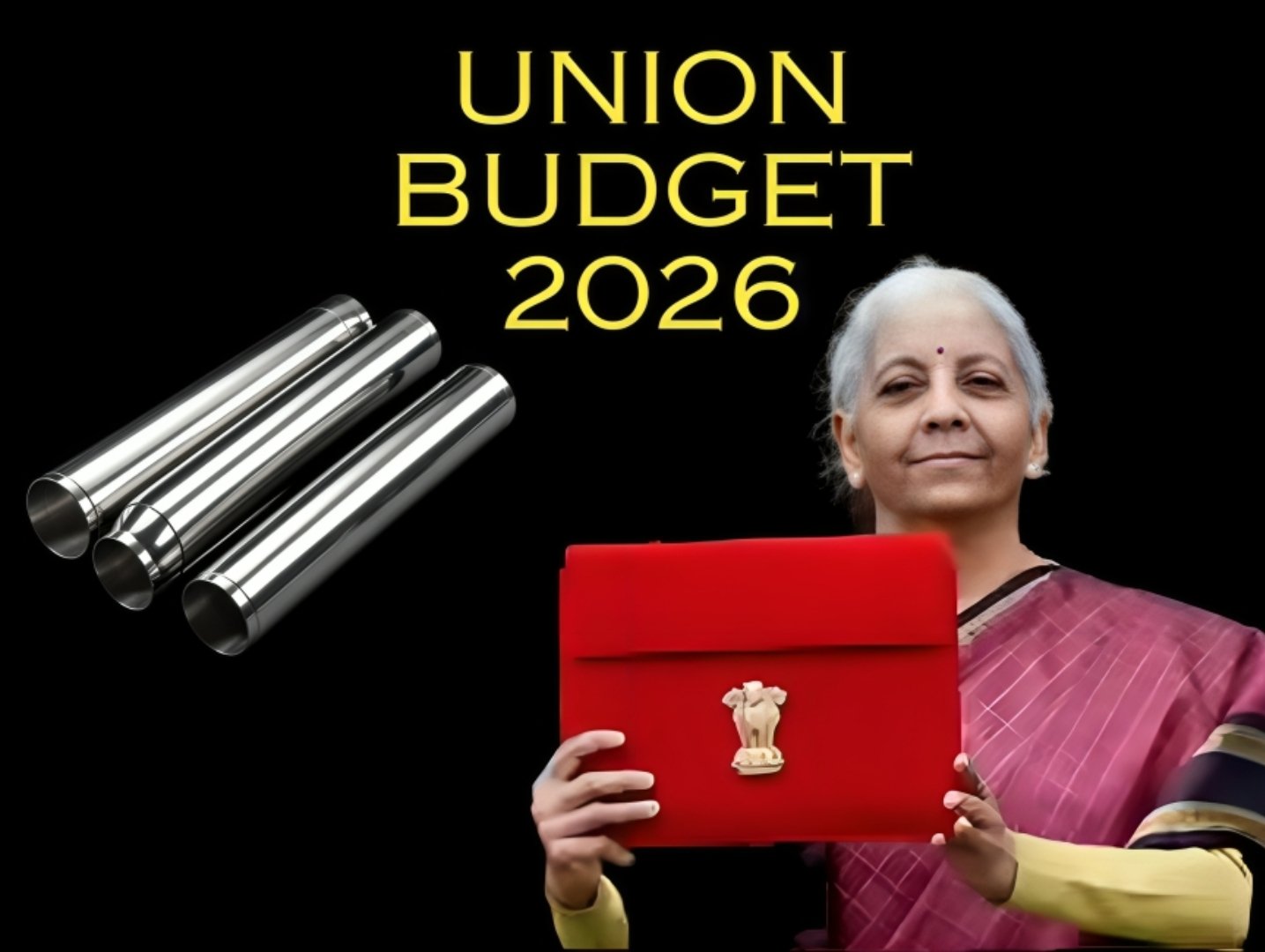
As India doubles down on infrastructure in the Union Budget 2026-27, stainless steel finds itself quietly moving to the centre of the country’s growth story. With capital spending rising to Rs 12.2 lakh crore, demand from metros, railways, and industrial projects is set to grow. While trade protection remains limited, steady raw material support offers manufacturers room to plan, invest, and expand.
Infrastructure spending puts stainless steel in the spotlight
When the Union Budget places infrastructure at the heart of economic growth, it sends a clear signal to industries that supply the building blocks of development. Budget 2026-27 does exactly that, with capital expenditure pushed up to around Rs 12.2 lakh crore. Behind the headline number lies a quieter but significant story for stainless steel, a material that has become essential to modern infrastructure.
Large national projects depend heavily on stainless steel for its strength, durability and low maintenance. Metro systems use it in coaches, stations, escalators and safety fittings. Railways rely on it for rolling stock, platforms and signalling equipment. Freight corridors, bridges, industrial parks and urban construction all draw on stainless steel for structural support and long-term reliability. As these projects move from planning to execution, demand for the metal tends to follow steadily rather than in short bursts.
For domestic producers, this infrastructure-led approach translates into stronger and more predictable demand. Industry observers often point out that such spending helps plants run closer to capacity and supports long-term planning. Mills supplying the domestic market benefit not only from volumes but also from the shift towards higher-quality and specialised stainless steel products required for transport and public infrastructure.
Executives across the sector have described the budget’s infrastructure focus as a demand stabiliser at a time when global markets remain uncertain. While export conditions fluctuate, India’s own project pipeline offers a cushion. Companies such as Jindal Stainless and others in the sector see ongoing and new public works as a foundation for sustained sales, helping justify investments in capacity expansion and process upgrades.
What industry leaders are saying
Industry voices broadly agree that the budget strengthens demand fundamentals for stainless steel, while also shaping the sector’s long-term direction.
Rajeev Sherry, Managing Director, Outokumpu India Pvt Ltd, highlighted the broad-based impact across sectors, saying, “Union Budgets in recent years have consistently prioritized public capital expenditure, especially in Railways, Urban infrastructure, Roads, bridges, airports, Renewable energy & hydrogen ecosystems.” He added that the impact on stainless steel is structural, noting “Higher demand for long products, flats, tubes and pipes, and growth in applications such as coaches, wagons, bridges, water pipelines, desalination, sewage treatment, metro interiors and architectural cladding.” He further pointed out that housing, energy transition, MSME support and sustainability measures collectively support volume growth, downstream fabrication, and stainless steel’s natural advantage due to its recyclability and lower lifecycle carbon footprint.
Dr Kamachi Mudali, Vice Chancellor, Homi Bhabha National Institute, observed that recent budgets have steadily strengthened the sector, stating, “The successive Union Budgets of 2024-25 and 2025-26 significantly boost India’s stainless steel industry by driving demand through massive infrastructure spending and fostering growth via raw material duty cuts.” He also noted that incentives for shipbuilding and urban development are increasing demand for stainless steel, particularly in premium segments.
Dr G H Thanki, Director and Principal Consultant, Corrosion Control and Monitoring Consultancy, described the budget as strong on demand but cautious on supply-side reform. He said, “The Union Budget 2026 presents a strong demand-side narrative for the stainless steel sector, though it leaves several structural supply-side challenges unaddressed.” While welcoming infrastructure allocations and sustainability initiatives like CCUS, he added, “The budget’s silence on anti-dumping measures and a dedicated National Stainless Steel Policy leaves domestic players vulnerable to margin pressure and raw material volatility.”
From an aerospace perspective, Wing Commander Venugopal Menon, Secretary, Society of Indian Aerospace Technologies and Industries, said, “It is a great move by the government as the availability of aerospace-grade stainless steel is essential for the aerospace sector’s growth. The Union Budget 2026 is expected to strengthen domestic production of specialised stainless steel materials, supporting the industry’s long-term manufacturing needs.”
Tapas Gupta, Territory Manager, Actini Group, said, “In my opinion, the Union Budget focuses on advancing the Indian stainless-steel industry through increasing infrastructure-led demand, with capital expenditure rising by 10-12% in 2026. The key measures include the Production Linked Incentive (PLI) scheme for speciality steel specially Stainless steel to reduce imports, continued import duty exemptions on raw materials like scrap and ferro-nickel, & One of the best announcements with clear relevance to heavy industries like steel (including stainless) is a Rs 20,000 crore push towards Carbon Capture, Utilisation and Storage (CCUS) technologies.”
Trade policy signals: support, but with gaps
Despite the positive demand outlook, the Budget stopped short of offering direct trade protection for stainless steel. Industry associations had been vocal ahead of the announcement, seeking measures to counter low-priced imports, particularly from countries where producers benefit from heavy subsidies. However, the budget speech did not introduce fresh anti-dumping duties or safeguard tariffs specific to stainless steel products.
This aspect has been closely observed by industry voices, who note that while infrastructure spending is set to lift consumption, managing import flows will be important to ensure domestic manufacturers fully benefit. Competitive overseas supplies may influence pricing dynamics, particularly in standard grades of stainless steel.
Indirect policy support offers some relief
That said, the budget did provide indirect support through policy signals aimed at manufacturing investment. Exemptions or reductions in basic customs duty on certain capital goods and the processing of critical minerals are expected to help companies modernise plants and improve efficiency. For stainless steel producers planning technology upgrades or downstream value-added facilities, such measures lower upfront costs and improve long-term competitiveness.
Industry commentators describe the trade policy stance as mixed. On one hand, the government continues to back domestic manufacturing through broader industrial policies and infrastructure demand. On the other hand, the lack of a dedicated stainless steel policy or fresh anti-dumping action leaves some structural issues unresolved. Access to raw materials, exposure to volatile global prices, and competition from imports remain challenges that companies must navigate largely on their own.
Still, many in the sector believe that policy signals tend to evolve gradually. Infrastructure spending creates momentum, and trade measures may follow if imbalances become more pronounced. For now, manufacturers appear focused on strengthening domestic linkages and improving efficiency rather than relying solely on protection.
Raw materials and costs
One area where policy continuity has been welcomed is raw material support. While Budget 2026 did not overhaul duties on inputs, earlier measures continue to benefit stainless steel producers. The reduction of basic customs duty to zero on ferro-nickel and molybdenum ores, both critical inputs, remains in place. Similarly, exemptions on ferrous scrap imports help keep input costs in check for manufacturers that rely on recycled material.
These steps may not make headlines, but they play a crucial role in cost management. Stainless steel production is energy- and input-intensive, and even small changes in raw material pricing can have a significant impact on margins. By keeping import levies low on essential inputs, policymakers allow domestic players to compete more effectively, particularly in price-sensitive segments.
Lower input costs also free up resources for investment. Manufacturers can channel savings into improving product quality, adopting cleaner technologies or expanding capacity to meet future demand. Over time, this strengthens the sector’s ability to serve infrastructure projects that increasingly demand higher specifications and longer life cycles.
The road ahead
Looking ahead, the stainless steel industry in India finds itself in a cautiously optimistic position. Infrastructure spending offers a solid demand base, while raw material support provides cost stability. At the same time, the lack of a dedicated stainless steel policy and limited trade protection mean that companies must stay agile, efficient and innovative.
The broader message of Union Budget 2026-27 is one of steady, long-term growth rather than quick fixes. For stainless steel, this means fewer dramatic announcements but a clear place in India’s development journey. As metros expand, railways modernise, and cities build for the future, stainless steel will continue to shape the country’s physical landscape quietly and reliably, in growing volumes.