Why stainless steel is winning the infrastructure debate
What if the strength of a bridge, the safety of a water pipe, or the lifespan of a railway station depended less on design and more on material choice? Across the world, infrastructure failures cost billions and disrupt daily life. Learn why stainless steel is increasingly seen as a smarter, safer and longer-lasting alternative to conventional materials in modern infrastructure.
Infrastructure materials: why the choice matters more than we think
Infrastructure is everywhere, even when we do not notice it. Roads carry us to work. Bridges connect cities. Water systems supply homes and hospitals. Transport hubs keep economies moving. Government buildings, power plants and public utilities form the backbone of modern society. All of these rely on materials that must perform reliably, day after day, year after year.
When these materials fail, the consequences are not minor. Cracked bridges lead to traffic chaos. Corroded pipelines cause water loss or contamination. Rusted structural elements raise safety concerns and demand urgent repairs. In many cases, the cost of fixing ageing infrastructure far exceeds the original cost of building it.
For decades, the construction industry has depended on what are commonly called conventional materials. These include mild steel, carbon steel, concrete and cast iron. Builders know these materials well. They are familiar, widely available and usually cheaper at the point of purchase. Because of this, they became the default choice for infrastructure projects around the world.
However, the demands placed on infrastructure today are very different from those of the past. Cities are larger. Usage levels are higher. Climate conditions are more extreme. Budgets for maintenance are under constant pressure. This has pushed engineers and planners to re-examine whether traditional materials are still the best option.
It is within this changing context that the comparison between stainless steel and conventional materials becomes important. This is not a debate driven by fashion or novelty. It is driven by performance, safety and long-term value.
Conventional materials: familiar, functional, but limited
To understand why stainless steel is gaining attention, it is important to first look at conventional materials and their strengths and weaknesses.
Concrete remains one of the most widely used construction materials. It is strong in compression, relatively affordable and suitable for large structures such as bridges, roads and buildings. Mild steel and carbon steel are commonly used for frames, reinforcements and supports because they are easy to fabricate and initially cost less. Cast iron, although used less today, still exists in older water and drainage systems.
These materials have served society well. Many historic structures built with them are still standing. However, their limitations become clear over time, especially in demanding environments.
Concrete can crack due to temperature changes, heavy loads or ground movement. Once cracks form, water and chemicals can enter, accelerating deterioration. Mild steel and carbon steel are prone to rust. To slow corrosion, they require protective coatings such as paint or galvanisation. These coatings wear off and need regular renewal. Cast iron, while strong, can be brittle and vulnerable to corrosion in certain conditions.
In coastal regions, areas with high humidity, industrial zones and polluted urban environments, these problems appear much faster. Salt, chemicals and moisture attack surfaces continuously. Maintenance becomes frequent, disruptive and expensive.
As infrastructure ages, these hidden weaknesses surface more often. This has led many decision-makers to question whether relying solely on conventional materials still makes sense for long-term public assets.
What sets stainless steel apart
Stainless steel is often misunderstood as just another type of steel. In reality, it is engineered specifically to resist the very problems that trouble conventional materials.
Its most important feature is its natural resistance to corrosion. This comes from its composition, which forms a protective layer on the surface. This layer repairs itself if damaged, meaning the material does not rely on paints or coatings to protect it. Even when exposed to moisture, air or many chemicals, stainless steel maintains its integrity.
Another key advantage is consistency. Stainless steel does not weaken easily over time. It performs well under repeated stress and remains stable across a wide range of temperatures. Whether used in cold climates, hot regions or industrial settings, its mechanical properties remain reliable.
Because of these qualities, stainless steel has gradually moved from specialised applications into mainstream infrastructure. What was once seen as a premium or niche material is now viewed as a practical solution for long-life projects.
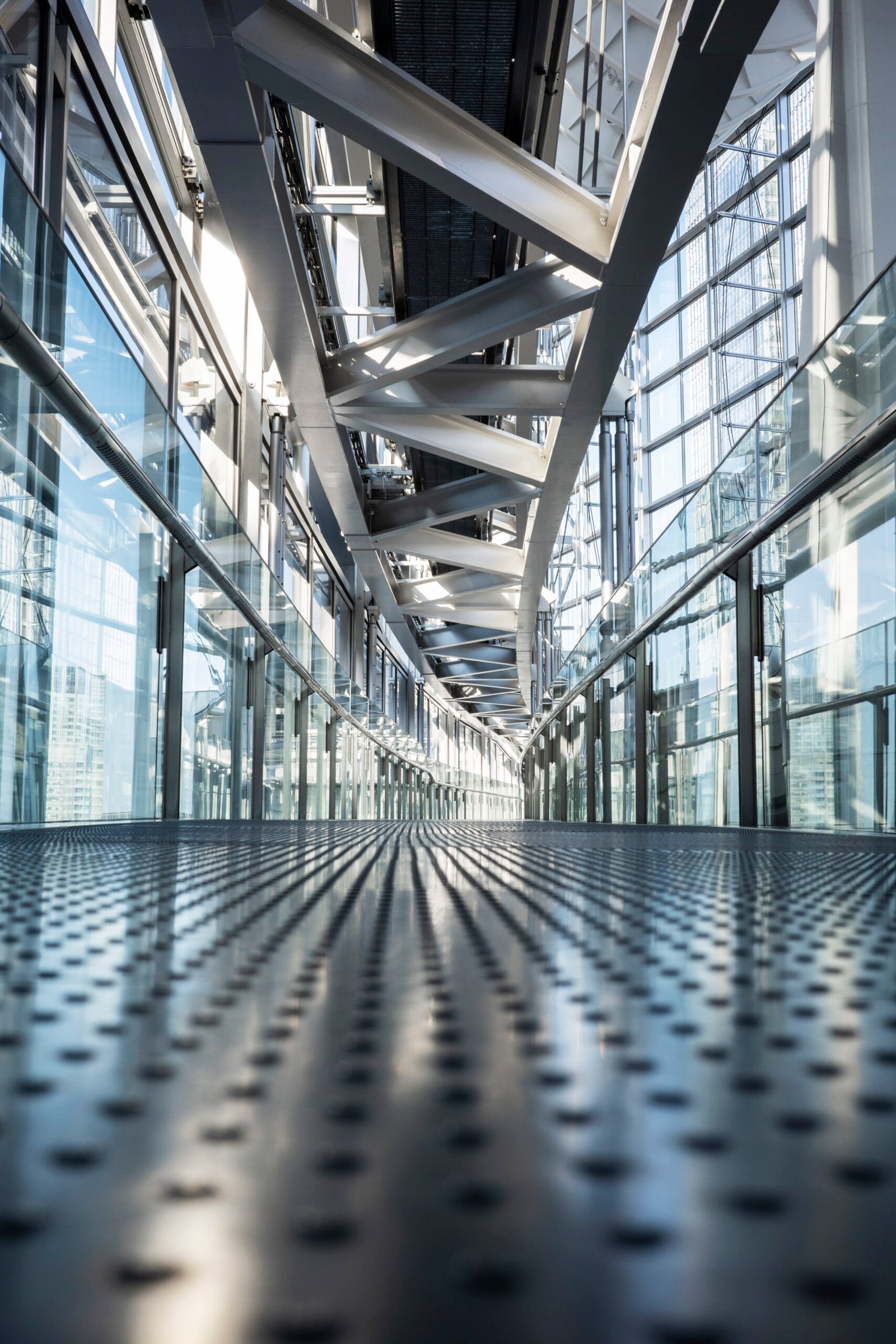
Its clean appearance is an added benefit. In public spaces such as transport stations or bridges, stainless steel offers a modern look that remains attractive for decades without constant refurbishment.
Performance, safety and cost: a clear comparison
When comparing stainless steel with conventional materials, the most important factor is not the initial purchase price. It is performance over the full life of the structure.
- Durability over time
Conventional materials depend heavily on external protection. Steel must be painted. Concrete must be sealed and repaired. Over time, these measures fail, and deterioration begins. Stainless steel, by contrast, protects itself. Its resistance to rust and corrosion gives it a much longer service life with fewer structural issues.
For infrastructure expected to last several decades, such as bridges or pipelines, this durability is critical. Fewer failures mean fewer disruptions and lower risk to public safety.
- Maintenance requirements
Maintenance is one of the largest hidden costs in infrastructure. Traditional materials require regular inspections, surface treatments and repairs. Rust must be removed. Cracks must be filled. Coatings must be reapplied.
Stainless steel significantly reduces this burden. In many cases, simple cleaning is enough to maintain performance and appearance. There is no cycle of stripping, repainting and repairing. Over time, this saves both money and manpower.
- Performance in harsh environments
Pollution, salt, chemicals and extreme weather conditions are increasingly common challenges. Conventional materials struggle under these pressures, leading to faster degradation.
Stainless steel excels in such environments. This is why it is widely used in coastal infrastructure, industrial facilities and water treatment systems. Even where other materials begin to fail, stainless steel continues to perform reliably.
- Safety and reliability
Material failure in infrastructure can have serious consequences. Rusted steel can weaken without obvious warning. Cracked concrete can hide internal damage.
Stainless steel offers more predictable behaviour. Its strength remains consistent, and signs of wear are easier to detect. This reliability reduces the risk of sudden failures and enhances public safety.
- Long-term cost
At first glance, stainless steel appears more expensive. Its upfront cost is higher than that of mild steel or basic metals. However, when maintenance, repairs, downtime and replacement are taken into account, the picture changes.
Over the full life of an infrastructure project, stainless steel often proves to be the more economical choice. Lower maintenance costs and longer service life offset the initial investment, delivering better value in the long run.
Sustainability, future needs and smarter choices
Modern infrastructure must also meet environmental expectations. Conventional materials often rely on chemical coatings and frequent replacement, which generate waste and consume resources.
Stainless steel is fully recyclable and can be reused without losing quality. Its long lifespan reduces the need for replacement materials, lowering overall environmental impact. These qualities align well with sustainable development goals and responsible resource use.
Today, stainless steel is already used in water supply systems, sewage networks, transport infrastructure, power plants and public buildings. As cities expand and become more complex, the demand for materials that are strong, reliable and sustainable will only grow.
There are still misconceptions. Some believe stainless steel is too costly or difficult to work with. In reality, advances in manufacturing and fabrication have made it more accessible than ever. When viewed from a life-cycle perspective, it is not a luxury material but a practical one.
Choosing the right material will always depend on the project. Short-term structures may still use conventional options. However, for critical, long-life infrastructure, looking beyond initial cost is essential.
The future of infrastructure will be shaped by durability, safety and sustainability. As maintenance budgets tighten and environmental pressures increase, materials that perform better over time will become the standard rather than the exception.
Building for decades, not just for today
The comparison between stainless steel and conventional materials is not about rejecting tradition. It is about recognising changing needs. Traditional materials have played an important role in development, but modern infrastructure demands more.
Stainless steel offers longer life, lower maintenance, reliable performance in harsh conditions and strong support for sustainability goals. When all factors are considered, it often delivers better value and greater safety.
For infrastructure designed to serve generations, stainless steel is not just an alternative. It is increasingly the smarter choice.