Why stainless steel is winning Indian kitchens now
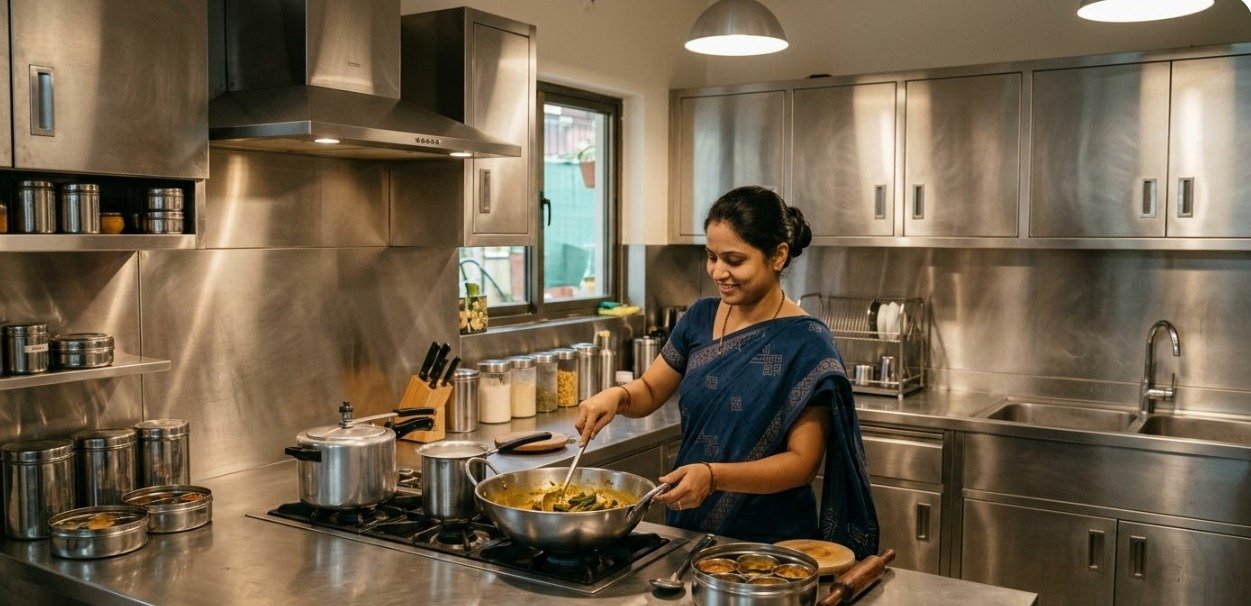
Rising LPG prices, the growth of induction cooking, and increasing awareness around health and sustainability are pushing households to rethink cookware choices. Stainless steel, once considered basic, is now emerging as a preferred option for durability, safety, and long-term value.
A gradual shift in everyday kitchens
Change in Indian kitchens rarely happens overnight. It tends to unfold slowly, shaped by daily habits and practical needs rather than sudden trends. Yet, beneath this quiet surface, a noticeable shift is taking place. Stainless steel cookware, long seen as a dependable but unremarkable choice, is gaining renewed importance.
This shift is not driven by style or nostalgia. Instead, it is the result of changing conditions, economic pressures, technological upgrades, and evolving consumer awareness. Households are becoming more thoughtful about what they use, especially in spaces as essential as the kitchen.
The kitchen is one of the most frequently used areas in any home. Decisions made here influence not just meals, but also long-term health, expenses, and efficiency.
Energy costs and the rise of induction cooking
One of the strongest drivers of this change is the rising cost of cooking fuel. Liquefied petroleum gas, which has long been a primary source of cooking energy in India, has seen price fluctuations in recent years. These changes are influenced by global factors, including instability in energy markets linked to regions such as West Asia.
As a result, households are becoming more cautious about their energy usage. Many are exploring alternatives that offer better control and efficiency. Induction cooktops have become a popular choice in this context.
Induction cooking uses electromagnetic fields to directly heat cookware, making it faster and often more energy efficient than traditional gas cooking. However, this technology comes with one important requirement. The cookware must be compatible.
Traditional materials such as copper or brass, commonly used in Indian kitchens for generations, do not always work efficiently with induction unless specially designed. This has led to a growing shift toward cookware that can support modern cooking methods.
Why stainless steel fits modern cooking needs
Stainless steel has emerged as a strong solution to this compatibility challenge. Its magnetic properties make it suitable for use with induction cooktops, while its durability makes it a practical long-term investment.
Unlike some materials, stainless steel does not react with food. This means it does not alter taste or release unwanted substances during cooking. It also does not rely on synthetic coatings, which can wear off over time in other types of cookware.
This combination of features makes stainless steel a reliable and adaptable option for modern kitchens. What began as a technical requirement has now evolved into a clear preference in many households.
Industry data shows that the demand for stainless steel cookware in India is growing steadily. With a market value already in the hundreds of millions of dollars, projections indicate strong growth in the coming years. This growth reflects not just increased adoption, but also a shift in consumer mindset.
Consumers are no longer simply looking for cookware that works. They are looking for cookware that performs well over time, supports new technologies, and aligns with their expectations of quality and safety.
Health awareness and safer choices
Health considerations are playing an increasingly important role in purchasing decisions. Over time, more consumers have become aware of how cookware can impact food quality and safety.
Non-stick cookware, while convenient, has raised concerns among some users due to its coatings. Although modern products are generally designed to meet safety standards, there is still a preference among many households for alternatives that are perceived as more stable and long-lasting.
Stainless steel addresses this concern by offering a non-reactive surface. It does not interact with acidic or alkaline foods, which helps maintain the natural taste and quality of ingredients. It also avoids the need for chemical coatings, which some consumers prefer to avoid.
This shift reflects a broader trend. Consumers are asking more questions before making a purchase. What materials are used? How will this product perform over time? Does it support healthier cooking?
In response, stainless steel has gained attention as a material that offers clarity and consistency. It does not require complex maintenance or special handling, making it suitable for everyday use.
Sustainability and long-term value
Beyond health, sustainability is another key factor shaping consumer choices. Households are increasingly aware of the environmental impact of their purchases, including how long products last and how they are disposed of.
Stainless steel stands out in this regard due to its durability. Cookware made from stainless steel can last for many years if properly maintained. This reduces the need for frequent replacement, which in turn lowers waste.
Another important advantage is recyclability. Stainless steel can be fully recycled without losing its quality. This supports broader efforts to reduce environmental impact and promote responsible consumption.
In practical terms, this means that stainless steel aligns well with a long-term approach to household planning. While the initial cost may be higher than some alternatives, the extended lifespan often makes it a cost-effective choice over time.
This focus on durability and reuse is becoming more common among consumers, especially as awareness of sustainability continues to grow. It reflects a shift from short-term convenience to long-term value.
A shift towards conscious consumer choices
Perhaps the most important change driving this trend is not just about materials or technology, but about mindset.
Today’s consumers are more informed than ever before. Access to information has made it easier to compare products, understand materials, and evaluate long-term benefits. As a result, purchasing decisions are becoming more deliberate.
This is particularly evident in the kitchen, where choices are closely linked to health, safety, and daily habits. Instead of relying solely on tradition or habit, many households are now evaluating options more carefully.
Historically, Indian kitchens have used a variety of materials, brass for cultural practices, copper for its heat conductivity, and steel for everyday convenience. Each material served a purpose.
What is different today is the intent behind these choices. Stainless steel is not just being used because it is available or affordable. It is being selected for its ability to meet modern requirements, including compatibility with induction cooking, safety standards, and durability.
This reflects a broader shift towards conscious living. Consumers are thinking more about how their choices affect not only their own households but also the environment and the wider system.
Redefining the modern Indian kitchen
As Indian households continue to adapt to changing conditions, the role of cookware is evolving as well. The kitchen is becoming a space where tradition meets modern efficiency.
Stainless steel is at the centre of this evolution. It offers a balance between performance and reliability, making it suitable for a wide range of cooking styles. It also supports the growing adoption of induction cooking, which is expected to become more common in the coming years.
At the same time, it aligns with broader trends in health awareness and sustainability. This combination of factors has helped stainless steel move from being a secondary option to a preferred choice in many homes.
In practical terms, this means that stainless steel is no longer just one of many choices. It is becoming a standard feature in modern kitchens.
The change may appear gradual, but its impact is significant. It reflects a shift in how people think about everyday decisions, moving from short-term convenience to long-term value.
In the modern Indian kitchen, stainless steel is not just a material. It is part of a larger story about how households are adapting, improving, and making more informed choices for the future.