Research Highlights Machining Benefits of Sunflower Oil in SS304 Stainless Steel
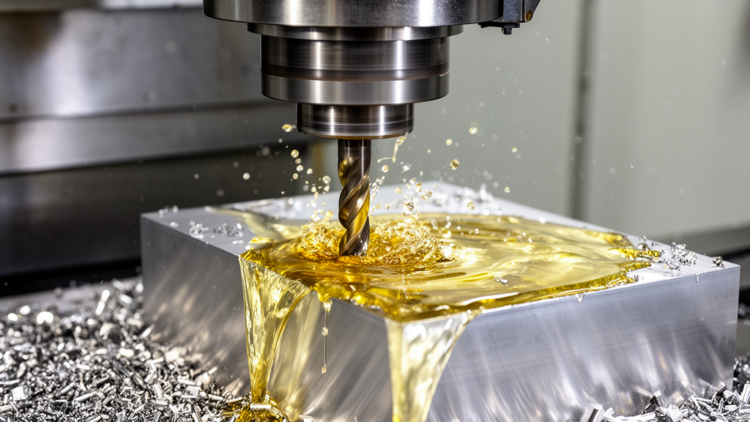
Researchers have identified refined sunflower oil as a potential alternative to conventional mineral-based dielectric fluids in electrical discharge machining (EDM) of SS304 stainless steel. A study published in Discover Applied Sciences reports improvements in material removal rate and depth of cut when sunflower oil is used as the dielectric medium, alongside better chemical stability and lower concentrations of selected metallic contaminants in the spent fluid.
The research, titled Sustainable Electro Discharge Machining of Aerospace Materials Using Eco-Conscious Dielectric Medium, examines the performance of plant-based oil in comparison with conventional mineral-based EDM oil. The findings offer insights into the potential role of alternative dielectric fluids in improving machining productivity while reducing dependence on petroleum-based materials.
Sunflower Oil Records Higher Material Removal Rate
The experimental investigation focused on SS304 stainless steel machined using an aluminium tool electrode. The researchers compared refined sunflower oil with conventional mineral-based EDM oil under different machining conditions.
An L16 orthogonal array was used to evaluate three key process parameters: discharge current, gap voltage and pulse-on time. The machining performance was assessed using two primary responses: Material Removal Rate (MRR) and Depth of Cut (DoC). The results showed that sunflower oil delivered higher maximum values for both parameters. With conventional EDM oil, the highest recorded material removal rate was 33.33 mm³/min. When refined sunflower oil was used, this increased to 39.08 mm³/min. Similarly, the highest depth of cut increased from 4.24 mm to 4.975 mm.
This represents an increase of approximately 17.25% in the highest recorded MRR and 17.57% in the highest recorded depth of cut compared with the corresponding mineral-oil results. The findings indicate that sunflower oil can support higher material removal under the experimental conditions evaluated in the study.
Discharge Current Emerges as a Key Machining Parameter
The researchers also applied Taguchi Signal-to-Noise (S/N) ratio analysis and Analysis of Variance (ANOVA) to understand the influence of individual machining parameters. The statistical analysis identified a difference in the dominant control factors between the two dielectric fluids. When conventional mineral-based EDM oil was used, pulse-on time emerged as the primary factor influencing machining performance. With sunflower oil, however, discharge current became the dominant parameter. The analysis attributed approximately 43% of the variation in both material removal rate and depth of cut to discharge current when sunflower oil was used.
Based on the statistical models, the researchers predicted an optimal machining configuration for sunflower oil comprising:
- Discharge current: 35 A
- Gap voltage: 50 V
- Pulse-on time: 400 µs
Under these predicted conditions, the model estimated a material removal rate of 42.62 mm³/min and a depth of cut of 5.42 mm.
These figures are model predictions rather than maximum values directly recorded during the experimental trials. They indicate the potential for further productivity improvements through process parameter optimisation.
Chemical Stability and Metallic Contamination
Beyond machining productivity, the investigation examined the dielectric behaviour and post-machining characteristics of the two fluids. Fourier Transform Infrared Spectroscopy (FTIR) was used to assess changes in the chemical composition of the dielectric media following machining. The analysis showed greater retention of functional groups associated with triglycerides in the spent sunflower oil. This suggests that refined sunflower oil retained its chemical structure more effectively during the machining process, indicating better post-machining chemical stability compared with the mineral-based dielectric fluid.
The researchers also used Inductively Coupled Plasma Optical Emission Spectrometry (ICP-OES) to examine metallic contaminants in the spent fluids. The analysis identified lower concentrations of selected metallic elements, including lead (Pb), zinc (Zn), copper (Cu), aluminium (Al), cobalt (Co) and manganese (Mn), in the spent sunflower oil compared with conventional EDM oil.
Scanning Electron Microscopy (SEM) was additionally employed to investigate the surface morphology of the machined components.
Together, these analytical methods provided insights into the performance, chemical behaviour and contamination characteristics of sunflower oil as an alternative dielectric medium.
Implications for Sustainable Stainless Steel Machining
The experimental results indicate that refined sunflower oil can improve material removal rate and depth of cut in EDM of SS304 stainless steel under the tested conditions. The study also reports better retention of chemical characteristics and lower concentrations of selected metallic contaminants in the spent fluid compared with conventional mineral-based EDM oil.
However, the findings are specific to the experimental setup, which involved SS304 stainless steel, an aluminium tool electrode and selected machining parameters. They do not establish the performance of sunflower oil across other stainless steel grades, machining processes or industrial operating conditions. Further testing under different machining conditions would help establish the fluid’s performance, operational suitability and potential for wider industrial application.
The research was conducted by Vinay Choudhari, Shailesh Shirguppikar, Rajendra Sargar, Akshay Kulkarni, Rohit Magdum, Chao-Ching Ho and Obinna Onyebuchi Barah.
The study, published in Discover Applied Sciences on November 3, 2026, concludes that refined sunflower oil is a technically viable alternative dielectric fluid for EDM of SS304 stainless steel under the tested conditions. The findings indicate improved material removal rate, greater depth of cut, better post-machining chemical stability and lower concentrations of selected metallic contaminants compared with conventional mineral-based EDM oil.
Research Reference: Choudhari, V., Shirguppikar, S., Sargar, R., Kulkarni, A., Magdum, R., Ho, C.-C., & Barah, O. O. (2026). Sustainable electro discharge machining of aerospace materials using eco-conscious dielectric medium. Discover Applied Sciences.
Disclaimer: This news article has been curated based on information published in the referenced research paper on bioengineer.org and other publicly available sources. The findings and data presented are attributed to the original researchers.