Outokumpu Advances Stainless Steel Applications Across the Hydrogen Value Chain
The growing adoption of hydrogen technologies is creating new opportunities for stainless steel applications across the green energy sector. From renewable energy storage and industrial decarbonisation to hydrogen production, processing, storage, distribution and transportation, these applications require materials capable of withstanding demanding operating conditions.
Outokumpu offers specialised stainless steel and nickel alloy solutions to support technologies across the hydrogen value chain, addressing requirements such as high-temperature strength, corrosion resistance, mechanical durability and performance under extremely low temperatures.
Hydrogen’s Role in the Energy Transition
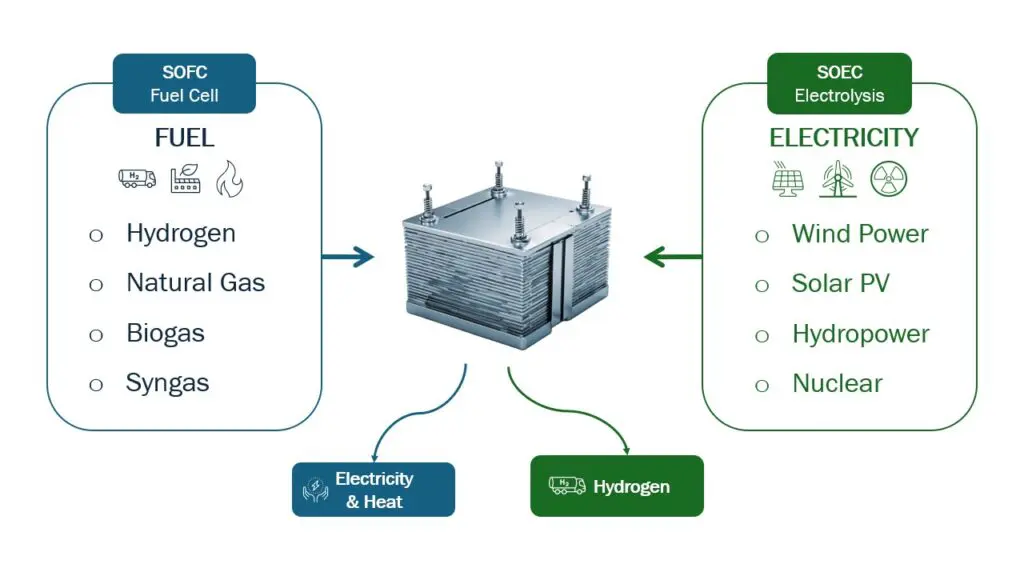
Hydrogen technologies have advanced significantly over the past decade, with several solutions approaching commercial readiness. These include solid oxide fuel cells (SOFCs), proton exchange membrane (PEM) electrolysers and alkaline electrolysers, all of which create opportunities for stainless steel applications. SOFC technology is also emerging as a competitive solution for stationary power generation, supported by its high electrical efficiency, operational stability, fuel flexibility and increasingly competitive lifecycle costs.
Hydrogen is increasingly being explored for two major applications: renewable energy storage and industrial decarbonisation. Surplus electricity generated from wind and solar installations can be used to produce hydrogen through electrolysis. The hydrogen can then be stored and converted back into electricity using fuel cells or other conversion technologies when required. This approach can help balance electricity supply and demand, improve grid stability and reduce dependence on fossil fuels. This approach can support applications ranging from grid-scale energy storage and industrial backup power to transport.
Many industrial sectors, including steelmaking, already rely on hydrogen. Replacing conventionally produced grey hydrogen with clean hydrogen generated through electrolysers powered by renewable electricity presents an opportunity to reduce industrial emissions.
Stainless steel is used in various hydrogen applications, including bipolar plates, piping, pressure vessels and Balance of Plant (BoP) components. Its corrosion resistance and mechanical strength also make it suitable for hydrogen refuelling infrastructure, including dispensers, high-pressure tubing and compressors.
Solid Oxide Technologies and Stainless Steel Applications
Solid oxide fuel cells generate electricity through the electrochemical oxidation of a fuel, while solid oxide electrolyser cells (SOECs) operate in reverse, using electrical energy to split water into hydrogen and oxygen.
Earlier generations of solid oxide fuel cells operated at temperatures approaching 1,000°C, requiring specialised and expensive materials. However, newer systems operate at intermediate temperatures of approximately 650–750°C, reducing material requirements and creating opportunities for more cost-effective stainless steel grades.
These technologies also offer scalability through modular architectures, allowing individual cell stacks to be combined to meet different power requirements.
A critical component in these systems is the interconnector bipolar plate, which provides electrical connections between cells while maintaining separation between hydrogen and oxygen. The material used must offer low thermal expansion, corrosion resistance in hydrogen-rich environments, stable electrical resistivity and long-term durability. Resistance to chromium evaporation, creep resistance at operating temperatures and suitable formability are also essential.
Therma 22FC™ for Next-Generation Solid Oxide Systems
To support the development of next-generation solid oxide fuel cells and electrolysers, Outokumpu has developed Therma 22FC™, a customised high-chromium ferritic stainless steel grade.
The nickel-free, stabilised grade contains 21% chromium and offers corrosion resistance, high-temperature strength, formability and weldability. Its higher chromium content helps limit chromium depletion at the interconnector surface.
Outokumpu’s controlled alloying process also helps optimise the material’s electrical conductivity, which is designed to remain stable throughout the operating life of the cell.
Stainless Steel and Nickel Alloys for Balance of Plant Components
Balance of Plant components play an important role in maintaining the performance, durability and service life of solid oxide systems. These include heat exchangers, reformers, piping, manifolds and other auxiliary equipment.
Such components are exposed to demanding operating conditions and can experience degradation mechanisms, including chromium contamination of the cell stack, carburisation and high-temperature oxidation.
Outokumpu’s portfolio includes Therma 310S, Therma 253 MA®, Therma Alloy 800H, Therma Alloy 8120 and Therma Alloy 625. These stainless steel and nickel alloy grades are selected by system integrators and equipment manufacturers for different Balance of Plant applications.
Hydrogen Storage and Material Requirements
Stainless steel also plays an important role in hydrogen storage, particularly in storage tanks, where material strength, corrosion resistance and low-temperature toughness are essential. Several grades have demonstrated suitability for these environments due to their stable austenitic microstructure, which helps maintain low-temperature toughness at temperatures as low as -273°C.
However, hydrogen embrittlement remains a challenge in high-pressure storage applications. Hydrogen atoms can permeate solid metals and, once absorbed, reduce the stress required for cracks to initiate and propagate. This can compromise material integrity and equipment safety.
Outokumpu’s experience with stainless steel grades and its broad material portfolio also support customers in identifying suitable materials for hydrogen storage tanks. Selecting the right grade requires evaluating material properties, microstructure and compatibility with hydrogen under specific operating conditions to help ensure the safety, reliability and long-term performance of storage systems.
Selecting appropriate materials for hydrogen storage systems therefore requires careful consideration of mechanical properties, microstructure, operating temperatures and hydrogen compatibility.
Hydrogen Development Across Southeast Asia
Hydrogen investments are gaining momentum across Southeast Asia as countries explore opportunities to reduce carbon emissions while maintaining energy security.
Singapore’s national hydrogen strategy anticipates that hydrogen could supply up to 50% of the country’s electricity demand by 2050. Across the region, feasibility studies, pilot projects, prototype testing and demonstration plants are underway to evaluate hydrogen production, transportation and utilisation technologies.
Singapore is also working with regional partners, including Australia, Indonesia and Malaysia , to develop regional hydrogen supply chains.
Outokumpu supports customers working on hydrogen applications through its stainless steel and nickel alloy solutions, technical expertise and material knowledge. As projects progress from demonstration to commercial deployment, selecting suitable materials will remain important for ensuring the long-term reliability, safety and performance of hydrogen infrastructure.
Disclaimer: This article has been prepared based on information available online regarding Outokumpu’s stainless steel and nickel alloy solutions for hydrogen applications. The information is presented for industry awareness and editorial purposes. Details of Therma 22FC™, its material specifications, solid oxide technologies, Balance of Plant applications, hydrogen storage and regional hydrogen developments are based on the original publication.