From Make in India to Made for the World: The Next Phase of India’s Manufacturing Growth
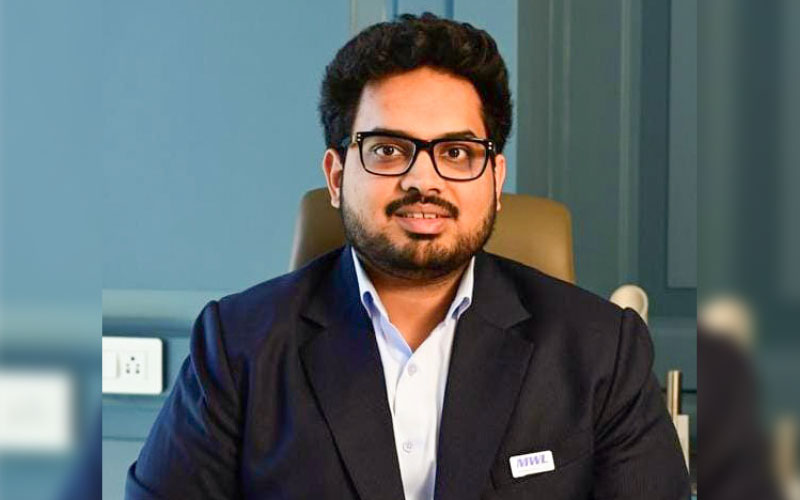
By Chandragupt Prakash Mangal, Managing Director, Mangalam Worldwide Ltd.
India isn’t really debating whether it can manufacture at scale anymore. The bigger question now is whether the world will start depending on India for what it manufactures.
The numbers back this up. India posted its highest-ever exports in FY 2025-26 — US$863.1 billion in total, split between US$441.8 billion in merchandise and US$421.3 billion in services. Manufacturing GVA, meanwhile, grew 7.72% in Q1 and 9.13% in Q2 of the same year, and medium- and high-technology activities now make up 46.3% of India’s total manufacturing value added.
Put together, these figures point to something bigger than just more factory output. Indian manufacturing is starting to climb the value chain.
This is happening at a moment when global supply chains are being rewired. Geopolitical tension, trade disruption and the push for more resilient supply chains are pushing companies to spread production across more countries — the China+1 strategy is one expression of that shift.
But for India, China+1 shouldn’t be treated as just a chance to become a cheaper alternative to China. Diversification gets you a foot in the door of global value chains. What keeps you there is capability.
From capacity to capability
The next phase of Indian manufacturing has to be about value addition.
Any supplier that competes mainly on price can eventually be swapped out for someone cheaper. A supplier that brings specialised capability, consistent quality, technical know-how, traceability and reliable delivery is much harder to replace.
That’s really where India’s manufacturing base needs to grow — in precision engineering, specialised materials, components, processing, testing and design. The goal shouldn’t just be making more products in India, but capturing more of the value chain behind those products, here in the country.
We’re already seeing this shift toward more sophisticated manufacturing. The Economic Survey 2025-26 puts medium- and high-technology activities at 46.3% of India’s manufacturing value added — a solid base for the next stage, where the focus moves from scaling up production to building specialised capabilities that command real value.
Building Value Through Advanced Materials
Take stainless steel. It underpins several export and industrial sectors — automotive, engineering, infrastructure, food processing, medical devices, energy. Its durability, corrosion resistance and recyclability also fit well with a manufacturing world that’s becoming more conscious of resources.
So the opportunity isn’t just about producing more stainless steel. It’s about building the downstream capability around it — specialised grades, precision processing, components, finished applications — the things that let India capture more of the value rather than just the raw material stage.
Quality and Sustainability as Drivers of Market Access
As Indian manufacturers go deeper into global supply chains, quality is going to matter more and more.
Global buyers aren’t just looking at price anymore. Consistency, certifications, traceability, delivery reliability and regulatory compliance are all shaping sourcing decisions now. For Indian manufacturers, the goal should be to turn predictability itself into a competitive edge.
Sustainability is becoming just as important.
The EU’s Carbon Border Adjustment Mechanism entered its definitive regime on 1 January 2026, covering iron and steel, aluminium, cement, fertilisers, electricity and hydrogen. The European Commission has noted that iron and steel made up 98% of CBAM-covered volumes in an early 2026 snapshot.
This tells us something broader: carbon performance is becoming part of how international trade actually gets priced. For Indian manufacturers, that means investments in energy efficiency, renewable power, recycling and credible emissions tracking aren’t just compliance costs — they can become genuine commercial advantages.
From alternative supplier to preferred partner
India’s growing trade relationships and export base give it a strong foundation. Merchandise exports rose to US$441.8 billion in FY 2025-26, up from US$437.7 billion the year before. But market access on its own doesn’t make you competitive.
Trade agreements need to turn into real investment, deeper supplier networks and products with more value built in. The real opportunity is moving from being an alternative supplier to becoming a preferred global partner.
That means Indian companies need to invest in technology, people, quality systems and long-term relationships with customers. It also means building stronger links between large manufacturers, MSMEs, material producers, research institutions and global buyers.
The first phase of Make in India was about building capacity. The next phase needs to be about building capability that global companies can actually rely on.
Made for the World should mean more than products stamped “manufactured in India.” It should mean products, materials and capabilities that global supply chains choose India for — and struggle to do without.