First Stainless Steel Containers Trialed for Rail Salt Cargo
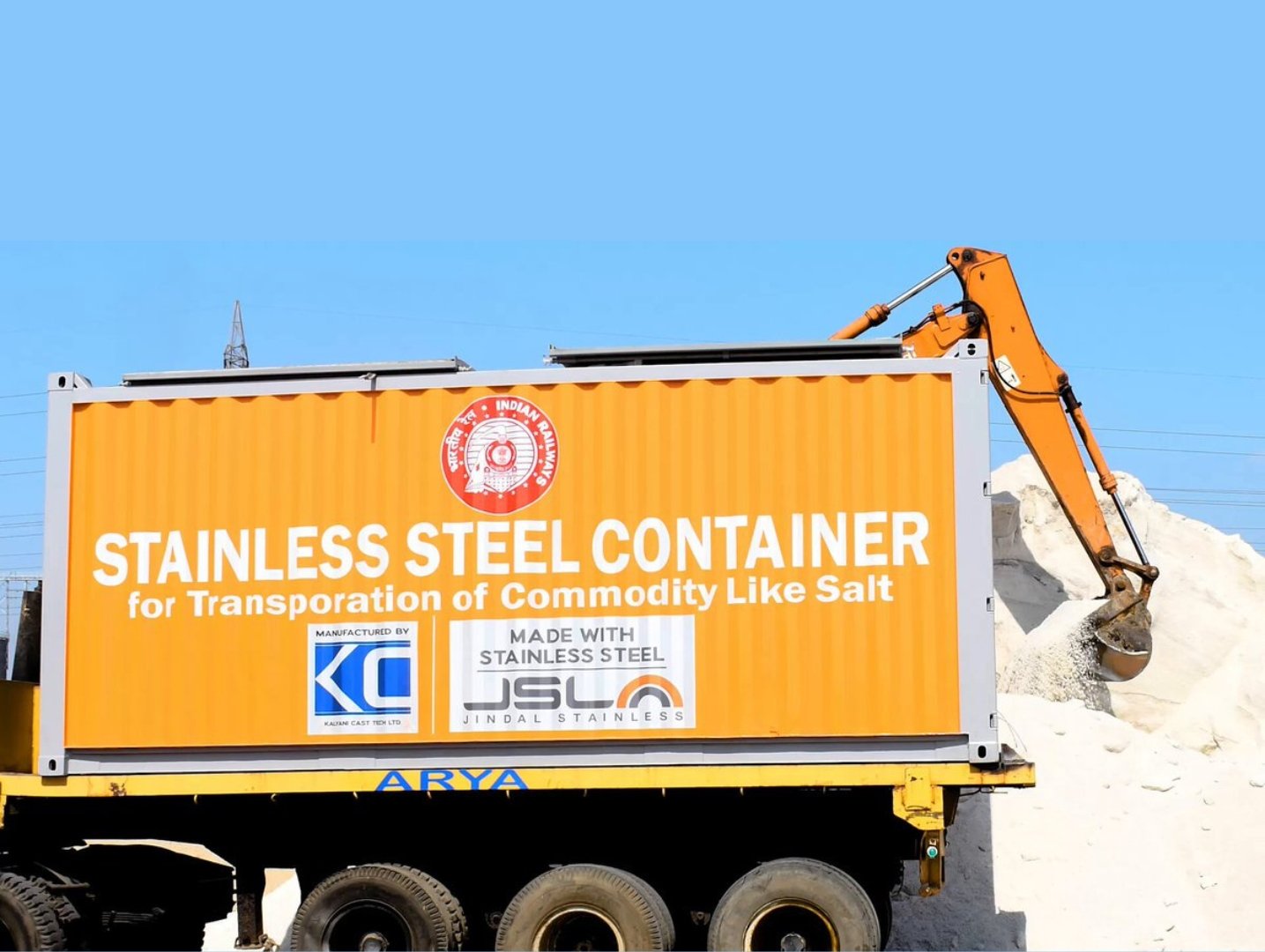
Indian Railways has carried out its first trial of stainless steel containers for transporting salt on the Bhimasar–Gandhidham section, marking a notable shift in bulk freight handling. The new containers are built to resist corrosion, speed up loading and unloading, and protect cargo quality. Could this be the upgrade that transforms how salt is moved across key industrial routes?
A new approach to salt transport
Indian Railways has successfully completed a trial run using stainless steel containers specifically designed for salt movement between Bhimasar and Gandhidham. Salt, by nature, is highly corrosive, and traditional containers often suffer from rust and structural wear over time. Stainless steel, however, offers a strong defence against corrosion, extending container life and helping maintain cargo integrity.
The trial signals an important step towards modernising freight operations, especially for commodities that pose handling challenges. By reducing the risk of damage caused by corrosion, the containers are expected to improve reliability and cut maintenance concerns. Railway officials noted that the design focuses on durability and cargo protection, both of which are critical when transporting mineral-based goods such as salt.
Industry observers have long highlighted how material choice affects logistics efficiency. In this case, stainless steel not only addresses the corrosion issue but also enhances the overall safety of transported goods. The trial suggests that Indian Railways is exploring practical solutions that align with both operational efficiency and long-term cost management.
Faster loading and unloading
One of the key highlights of the new system is its speed. Each stainless steel container features dual large openings that allow rapid loading using a silo system or a Poclain machine. During the trial, loading time was recorded at under 15 minutes per container, a significant improvement compared to more labour-intensive methods.
Unloading has also been simplified. With the use of a hydraulic tipper truck, containers can be emptied in less than five minutes. This reduction in turnaround time can have a substantial impact on wagon availability and route efficiency, particularly on busy freight corridors.
Railway representatives explained that quicker handling reduces idle time and improves asset utilisation. Faster processes can also ease congestion at loading points and terminals, helping maintain smoother traffic flow. For bulk commodities like salt, where large volumes are moved regularly, even small time savings can translate into meaningful operational gains.
Better efficiency and cleaner operations
Beyond speed and durability, the stainless steel containers bring notable efficiency benefits. Each container has a tare weight of around three tonnes, with two containers accommodated per wagon. This configuration enables the movement of up to 68.4 tonnes of salt per wagon, optimising payload capacity.
The new system also eliminates the need for manual cleaning, a task that traditionally adds labour costs and delays. Stainless steel surfaces are easier to maintain and less prone to residue build-up. Additionally, the container design reduces moisture ingress, a factor that can affect salt quality during transit.
Railway officials described the trial as a step towards a more modern and dependable freight model. Reduced cleaning requirements, lower corrosion risks, and improved cargo protection collectively enhance operational efficiency. The initiative reflects Indian Railways’ broader efforts to adopt technology-driven and resource-efficient logistics practices.
If scaled up, the stainless steel container system could represent a practical evolution in how sensitive bulk goods are handled, setting a precedent for similar applications across the network.