Stainless steel plays a crucial role in nation’s growth: Vivek Taneja on India’s growing economy
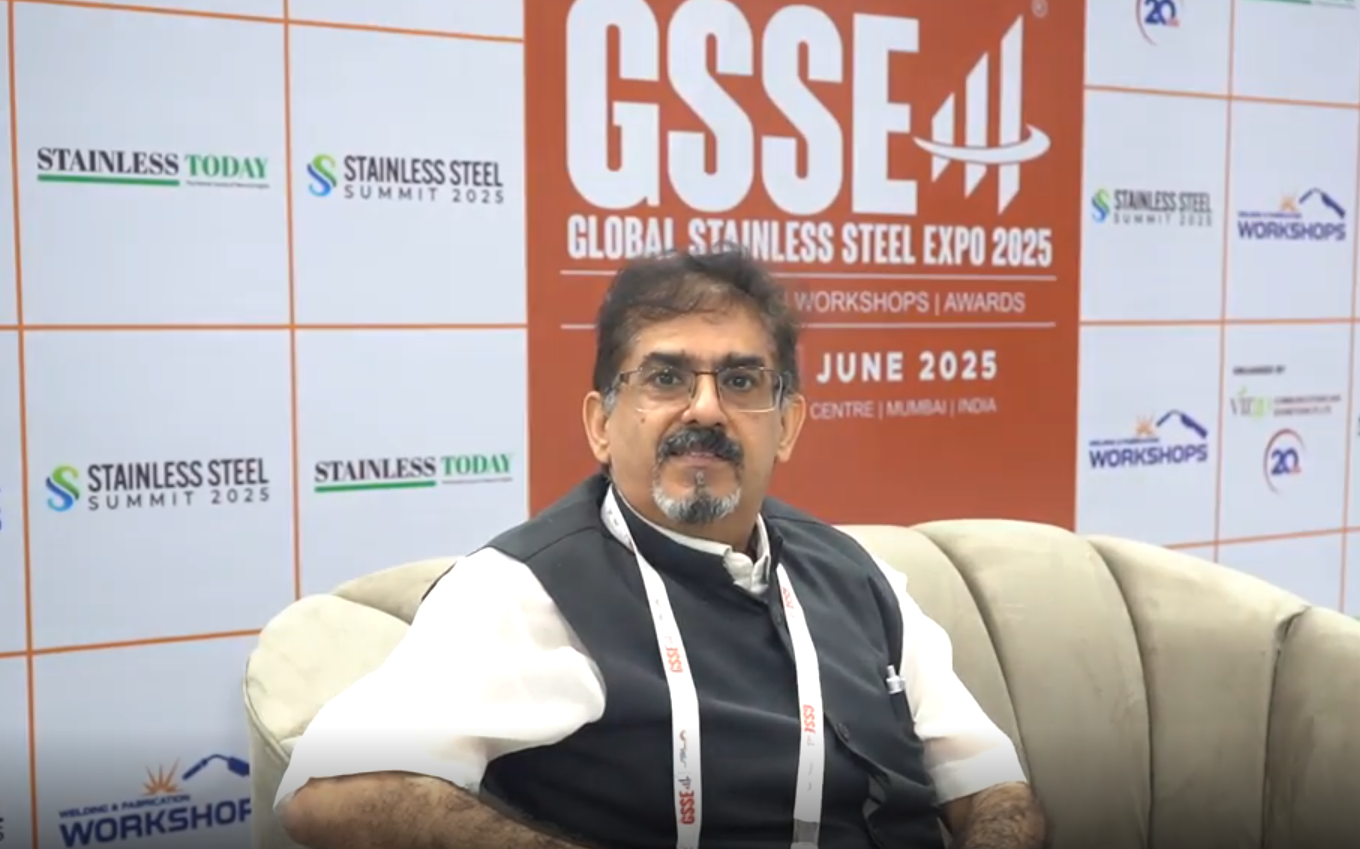
Vivek Taneja, Managing Director of Suma India, talks about the vital role of stainless steel in driving India’s infrastructure and rural development and the challenges in adoption.
As India accelerates its journey toward becoming the world’s third-largest economy, stainless steel is emerging as a key enabler of sustainable growth, especially in infrastructure and rural development. With most of the country’s infrastructure yet to be built, the material’s strength, durability, and non-corrosive nature make it indispensable for long-term projects.
In an insightful conversation with Team Stainless Today at the Global Stainless Steel Expo (GSSE) 2025, Vivek Taneja, Managing Director of Suma India, shares his views on the evolving role of stainless steel in India’s development, the challenges facing the sector, and the policies needed to unlock its full potential.
Could you please tell us a bit about Suma India?
Suma India is a 100 per cent subsidiary of Suma Rührtechnik of Germany. We are the world’s largest and Europe’s biggest player in mixing solutions, basically agitation solutions for the biogas industry, with roughly about 30 per cent market share in Europe for agitation technology.
How significant are exhibitions like GSSE for the industry?
This is a wonderful platform, especially considering India’s rapid development and its aspiration to become the world’s third-largest economy. With around 70 per cent of the country’s infrastructure still to be built, steel plays a crucial role in shaping this growth. Especially when it comes to infrastructure, steel forms the backbone of the entire development. From that perspective, this conference on stainless steel is aptly timed, bringing all the major players and important policymakers onto the same platform.
What trends are you seeing in this sector, both in terms of manufacturing and consumption?
Fortunately, India is emerging as a large consumer of steel, especially with the education level increasing among users. Earlier, the usual mild steel users were capex-sensitive, but now consumers are looking at the lifetime cost of products and shifting more towards stainless steel due to its non-corrosive nature and long-lasting benefits. With the growth the industry is seeing in India, we are witnessing an increase in stainless steel manufacturing. The market is growing, and given the demographics and the growth potential, we see a really good future ahead. We are very upbeat about it.
What are some of the challenges the sector is facing?
One of the main challenges is the initial capex because the mindset change is still a slow process. The education level of people regarding different grades of steel and the lifetime cost is still lacking. Once this awareness reaches a broader set of people, it will have immense importance for the entire industry. Secondly, the reach of stainless steel into the rural belt is still missing. That is extremely important because if India really has to grow, the 70 per cent of India which lies in rural areas needs to be reached. How good-quality steel and different grades of steel reach the rural areas becomes a crucial point when you look at the growth of the industry.
Do you see a definite rise in the use of stainless steel?
Yes. As I said, if India has to reach anywhere near its aspirations of being a developed nation, economic development must reach the rural areas. Otherwise, it’s a pipe dream. For development to reach rural areas, infrastructure growth in these regions is essential. Without that, India cannot grow to the levels we are looking at. Stainless steel becomes an important lever in this rural development because we need to reverse the rampant urbanisation we are seeing. Most of our cities are no longer liveable, they are becoming concrete jungles with traffic, water quality, and air quality issues, largely because of migration from rural to urban areas. This trend needs to be reversed, and that can only happen if we start shifting our economy towards rural areas. Stainless steel will play a pivotal role in helping that reversal of economic development.
Do you have any expectations from the government in terms of policymaking for the sector?
Yes, policies always play a significant role in giving a push to the industry. Given the non-corrosive nature of stainless steel as compared to mild steel, implementing its usage across the entire coastal belt could be one key policy focus.
Secondly, in terms of the use of steel, specifically stainless steel, in infrastructure built in rural areas, its longevity makes it crucial. Infrastructure in far-off rural regions may not be inspected daily by agencies, so using good-quality stainless steel ensures durability for the lifetime of the project. Policies that ensure the right quality of steel goes into infrastructure or rural development projects will be vital. For instance, biogas projects can utilise stainless steel effectively to revive local economies. Encouraging its use, perhaps through SGST benefits for such projects, could serve as a key enabler for rural economic development. These are some areas that need to be looked into more seriously by policymakers.