India’s Stainless Steel Sector Needs a Dedicated Policy Framework
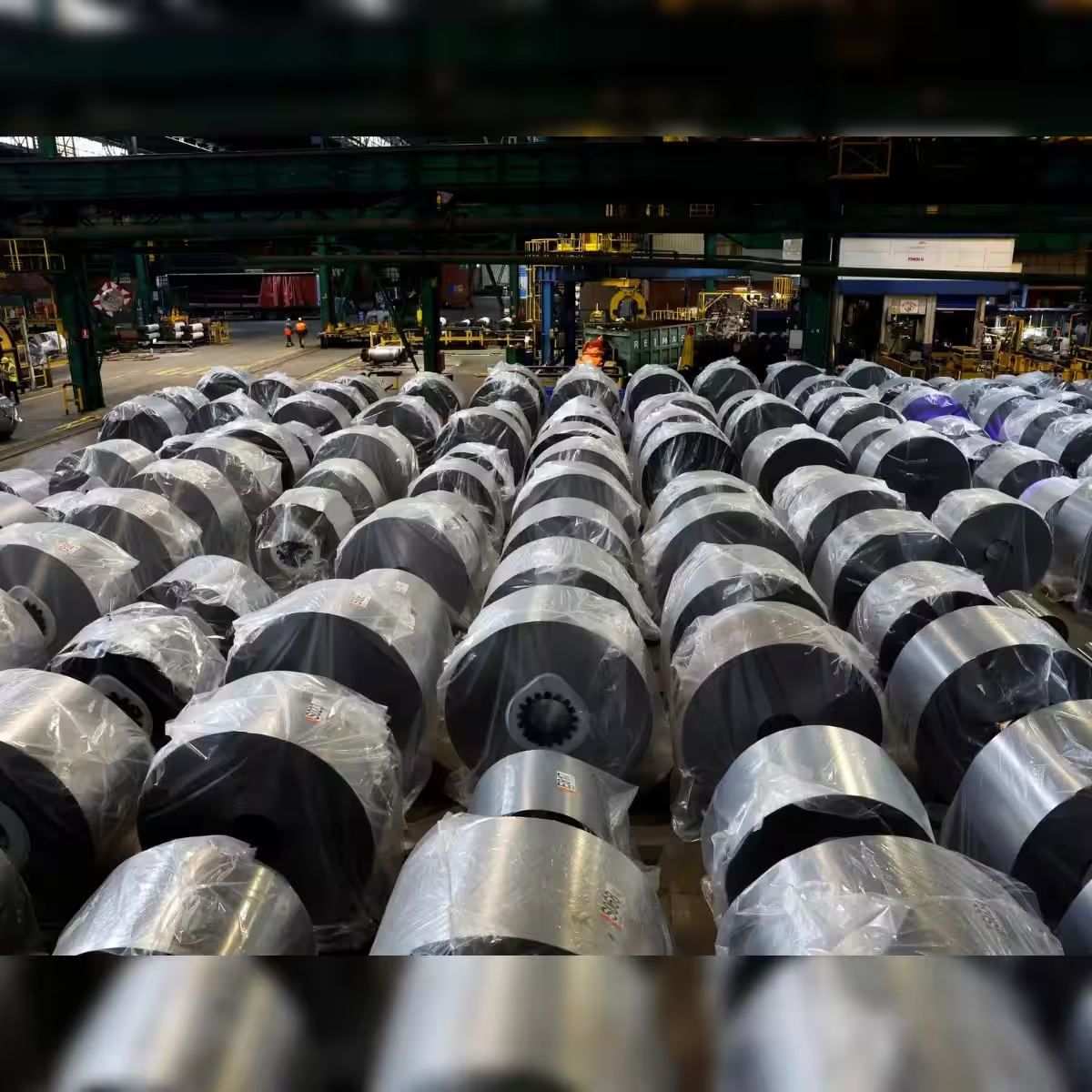
India’s stainless steel industry hass evolved into a strategic part of the country’s manufacturing and infrastructure ecosystem. From railways and defence to healthcare, food processing, renewable energy and construction, stainless steel is increasingly being used in applications where durability, hygiene, corrosion resistance and long service life are critical.
Yet the sector continues to operate largely within policy frameworks designed for the broader steel industry. Industry stakeholders have increasingly argued that this approach does not adequately account for the distinct characteristics of stainless steel manufacturing and its end-use applications.
Why Stainless Steel Needs a Separate Policy
Unlike conventional carbon steel, stainless steel production depends on critical raw materials such as chromium, nickel and molybdenum, alongside stainless steel scrap. Its applications are also significantly different, ranging from advanced engineering and healthcare to transportation, clean energy and high-performance industrial equipment.
This distinction becomes important when policies covering the wider steel sector are applied uniformly to stainless steel. Measures designed around conventional steel products may not always address the raw material requirements, production economics, trade dynamics and value-added applications specific to stainless steel.
A dedicated National Stainless Steel Policy could provide a framework that addresses these requirements while establishing clearer long-term priorities for production, consumption, raw material security, technology and exports. Jindal Stainless has also highlighted the need for such a policy to address imports, quality compliance, MSME support and competitiveness.
Policy Gaps and Import Pressures
India has significant stainless steel manufacturing capacity, but the sector continues to face competition from imports. Recent industry discussions have focused on low-priced imports, trade remedies, quality standards and the need to ensure a level playing field for domestic producers.
A sector-specific policy could bring greater clarity to trade measures while also supporting domestic manufacturers, downstream processors and MSMEs.
Importance of Stainless Steel in India’s Growth
The case for a dedicated policy extends beyond manufacturing. Stainless steel can contribute to longer-lasting infrastructure because of its corrosion resistance, durability and relatively low maintenance requirements.
As India expands railways, urban infrastructure, renewable energy, healthcare, defence and advanced manufacturing, policy decisions around material selection could have significant implications for lifecycle costs and asset performance.
A National Stainless Steel Policy could therefore focus not only on production, but also on increasing appropriate stainless steel consumption, encouraging value-added manufacturing, strengthening raw material security, supporting R&D and promoting lifecycle-based procurement.
With stainless steel demand in India continuing to expand, the industry’s argument for a policy framework tailored to its specific requirements is gaining greater attention. A dedicated approach could help align manufacturing capacity, domestic demand, trade policy and infrastructure priorities while strengthening the long-term competitiveness of India’s stainless steel sector.