India’s Pharma Manufacturing Growth Needs Stronger Stainless Steel Ecosystem and Policy Support: ISSDA
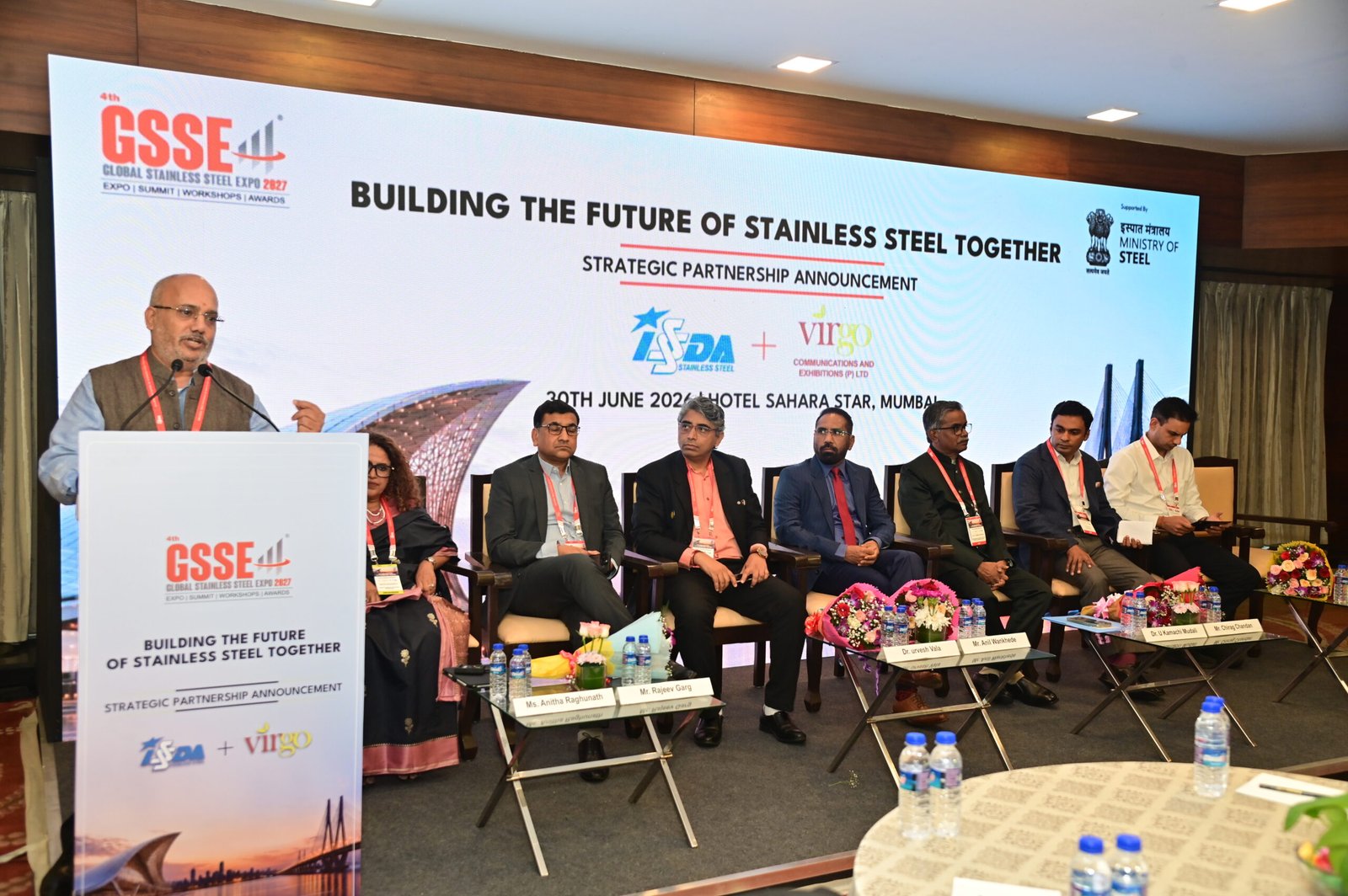
As India strengthens its position as a global manufacturing hub for pharmaceuticals, medical devices, and healthcare infrastructure, industry leaders have underscored the need for a dedicated National Stainless Steel Policy and a National Anti-Corrosion Policy to unlock the full potential of the country’s stainless steel industry.
The call was made during the announcement of the strategic partnership between the Indian Stainless Steel Development Association (ISSDA) and the Global Stainless Steel Expo (GSSE), organised by Virgo Communications & Exhibitions Pvt. Ltd. The collaboration aims to accelerate policy advocacy, promote wider adoption of stainless steel, encourage global partnerships, and strengthen industry engagement across key sectors.
Stainless Steel: A Critical Material for Pharmaceutical Manufacturing
The pharmaceutical industry relies extensively on stainless steel for manufacturing equipment, processing systems, storage tanks, cleanroom infrastructure, and pipelines, where corrosion resistance, hygiene, and durability are essential to meeting stringent regulatory standards.
Beyond manufacturing, stainless steel continues to play a vital role in healthcare infrastructure, including hospitals, laboratories, diagnostic centres, operating theatres, medical furniture, and other critical applications that demand long-term performance, easy maintenance, and high levels of sanitation.
Dedicated Policy Needed for Stainless Steel
Speaking at the event, Rajamani Krishnamurti, President, ISSDA, said India’s pharmaceutical sector already depends heavily on stainless steel to maintain product quality and comply with rigorous hygiene requirements.
He noted that although India possesses strong manufacturing capabilities and technical expertise, stainless steel continues to be treated under the broader steel category despite having distinct raw material requirements, manufacturing processes, and end-use applications.
According to Krishnamurti, a dedicated National Stainless Steel Policy is essential to ensure raw material security, encourage fresh investments, enhance global competitiveness, and strengthen India’s manufacturing ecosystem across sectors including pharmaceuticals, healthcare, and medical devices.
Concern Over Quality Control Order Suspension
Krishnamurti also raised concerns over the suspension of the Quality Control Order (QCO), warning that unrestricted imports of substandard stainless steel could adversely affect domestic manufacturers as well as industries that depend on high-quality materials.
India currently has an installed stainless steel production capacity of approximately 7.5 million tonnes, yet operates at only 60–65% capacity utilisation, while nearly 25–28% of domestic demand continues to be met through imports, largely from China.
Corrosion Costs India Nearly ₹12 Lakh Crore Annually
Highlighting the economic impact of corrosion, Krishnamurti stated that India loses nearly ₹12 lakh crore every year, equivalent to around 4% of the country’s GDP, due to corrosion-related damage to public infrastructure, industrial assets, and utilities.
He advocated the introduction of a National Anti-Corrosion Policy to encourage lifecycle-based infrastructure planning and greater adoption of corrosion-resistant materials.
According to ISSDA, stainless steel offers significantly longer service life, lower maintenance costs, and improved lifecycle value, making it an ideal material for hospitals, pharmaceutical facilities, water infrastructure, and other critical public assets.
Significant Growth Opportunity Ahead
Krishnamurti further observed that stainless steel is witnessing increasing adoption across healthcare, pharmaceuticals, water infrastructure, green hydrogen, ethanol, ports, and specialised engineering owing to its durability, recyclability, and long operational life.
He also pointed out that India’s per capita stainless steel consumption stands at only 3.5 kg, compared with the global average of 6–7 kg, indicating substantial room for future growth as investments in manufacturing and infrastructure continue.
ISSDA–GSSE Partnership to Strengthen Industry Collaboration
Speaking on the collaboration, Anitha Raghunath, Managing Director, Virgo Communications & Exhibitions Pvt. Ltd., said the partnership would create a stronger platform for knowledge exchange and industry-wide collaboration.
She noted that ISSDA’s technical leadership, combined with GSSE’s ability to connect manufacturers, technology providers, policymakers, consultants, and end-user industries, will help promote wider stainless steel adoption, facilitate international collaborations, and encourage sustainable industrial development.
Industry Calls for Stronger Manufacturing Ecosystem
Rajeev Garg, Group Head – Marketing & Sales, Jindal Stainless Limited, said the collaboration comes at a crucial time when Indian manufacturers require stronger policy support to remain globally competitive.
He highlighted that while India is already the world’s second-largest consumer of stainless steel, increasing imports continue to place pressure on domestic producers.
According to Garg, a stronger industry platform will help address key issues such as unfair imports, raw material security, lifecycle-based infrastructure planning, and sustainable manufacturing, while supporting critical sectors including pharmaceuticals, healthcare, and medical devices where quality and reliability remain paramount.
The strategic partnership between ISSDA and the Global Stainless Steel Expo will focus on advancing policy dialogue, promoting international best practices, expanding domestic stainless steel applications, strengthening global collaborations, and creating a comprehensive knowledge-sharing platform during the 4th Global Stainless Steel Expo (GSSE).
Industry leaders expressed confidence that the initiative will accelerate stainless steel adoption across pharmaceutical manufacturing, healthcare infrastructure, medical devices, and other high-value industries, further supporting India’s vision of becoming a globally competitive manufacturing powerhouse.